
David S. Rosenbaum, MD - FIHS Secretary

| David S. Rosenbaum, MD |
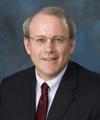
David S. Rosenbaum, M.D., is the chief of Cardiology and director of the Heart & Vascular Center for
The MetroHealth System and Professor of Medicine, Biomedical Engineering, Physiology and
Biophysics at Case Western University (CWRU). He received his cardiology and clinical
electrophysiology training at Massachusetts General Hospital, and post-doctoral research training in
the Harvard-MIT Division of Health Sciences and Technology.
As an internationally recognized cardiologist, scientist, and thought leader he has served on editorial
boards in numerous leadership roles in professional societies. He is currently Chairs both the
Research Health Policy Committee and the Basic Science Program Committee for the Heart Rhythm
Society (HRS), and serves on the Cardiac Electrophysiology Committee for the American College of
Cardiology.
The MetroHealth System and Professor of Medicine, Biomedical Engineering, Physiology and
Biophysics at Case Western University (CWRU). He received his cardiology and clinical
electrophysiology training at Massachusetts General Hospital, and post-doctoral research training in
the Harvard-MIT Division of Health Sciences and Technology.
As an internationally recognized cardiologist, scientist, and thought leader he has served on editorial
boards in numerous leadership roles in professional societies. He is currently Chairs both the
Research Health Policy Committee and the Basic Science Program Committee for the Heart Rhythm
Society (HRS), and serves on the Cardiac Electrophysiology Committee for the American College of
Cardiology.
He as served on multiple advisory panels and research study sections at the National Institutes of Health, AHA, and NASA,
He has been particularly involved in programs devoted to young physician scientist, serving on Young Investigator Award
committees mentoring trainees in CWRU Medical Scientist Training Program, and numerous PhD and post-doctoral trainees,
and is Director of MetroHealth’s Physician Scientist Program (PSP). In 1999, he established the Heart & Vascular Research
Center at MetroHealth, a state-of-the-art facility for training cardiovascular investigators.
Under his leadership, the MetroHealth Heart & Vascular Center has initiated several pioneering cardiovascular research
studies. These include developing new methods for predicting and preventing sudden cardiac death (SCD), as well as the
development of novel paradigms for preventing arrhythmias using targeted gene therapy. His research contributions span
from the “bench to the bedside”, including the identification of T wave alternans as a marker for SCD in humans, and more
recently describing molecular mechanisms for cardiac alternans responsible for triggering electrical instability in the heart.
He has been particularly involved in programs devoted to young physician scientist, serving on Young Investigator Award
committees mentoring trainees in CWRU Medical Scientist Training Program, and numerous PhD and post-doctoral trainees,
and is Director of MetroHealth’s Physician Scientist Program (PSP). In 1999, he established the Heart & Vascular Research
Center at MetroHealth, a state-of-the-art facility for training cardiovascular investigators.
Under his leadership, the MetroHealth Heart & Vascular Center has initiated several pioneering cardiovascular research
studies. These include developing new methods for predicting and preventing sudden cardiac death (SCD), as well as the
development of novel paradigms for preventing arrhythmias using targeted gene therapy. His research contributions span
from the “bench to the bedside”, including the identification of T wave alternans as a marker for SCD in humans, and more
recently describing molecular mechanisms for cardiac alternans responsible for triggering electrical instability in the heart.

 |
| |
 |
| |
 |
| |
 |
| |
 |
| |
 |
| |
 |
| |
 |
| |
 |
| |
 |
| |
 |
| |
 |
| Israel Heart Society |