
Eugene Braunwald, MD - FIHS Vice President

| Eugene Braunwald, MD |
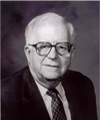
EUGENE BRAUNWALD, M.D. is the Distinguished Hersey Professor of Medicine at Harvard Medical
School, and Chairman of the TIMI Study Group at the Brigham and Women’s Hospital.
Dr. Braunwald received his medical training at New York University and completed his Medical
Residency at the Johns Hopkins Hospital. He served as the first Chief of the Cardiology Branch and
as Clinical Director of the National Heart, Lung and Blood Institute, founding Chairman of the
Department of Medicine at the University of California, San Diego. From 1972 to 1996 he was
Chairman of the Department of Medicine at the Brigham and Women's Hospital. He was a founding
trustee and Chief Academic Officer of Partners HealthCare System.
School, and Chairman of the TIMI Study Group at the Brigham and Women’s Hospital.
Dr. Braunwald received his medical training at New York University and completed his Medical
Residency at the Johns Hopkins Hospital. He served as the first Chief of the Cardiology Branch and
as Clinical Director of the National Heart, Lung and Blood Institute, founding Chairman of the
Department of Medicine at the University of California, San Diego. From 1972 to 1996 he was
Chairman of the Department of Medicine at the Brigham and Women's Hospital. He was a founding
trustee and Chief Academic Officer of Partners HealthCare System.
Dr. Braunwald’s first major paper was published in Circulation Research in July 1954, and he has been a major force in
cardiology in the past half century. His early work focused on the control of ventricular function and he was the first to
measure both left ventricular ejection fraction and left ventricular dp/dt in patients. His group showed the first
neurohumoral defect in human heart failure, defined the pathophysiology of hypertrophic cardiomyopathy and
demonstrated salvage of ischemic myocardium following coronary occlusion. They defined myocardial stunning and
ventricular modeling following myocardial infarction. For the past 22 years, as Chairman of the TIMI Study Group, he and
his colleagues demonstrated improved patient survival with a patent coronary artery which led to the widely accepted “open
artery hypotheses.” They were the first to show the benefit of preventing adverse remodeling of the infarcted ventricle with
ACE inhibition. In the PROVE-IT TIMI 22 Trial, in 2004, they demonstrated the benefit of more intensive reduction of LDL in
high risk coronary artery patients, which has already changed practice guidelines and will favorably affect the lives of
millions.
Dr. Braunwald is an editor of Harrison's Principles of Internal Medicine, and the founding editor of Heart Disease, now in its
7th Edition, the most influential textbooks in their fields.
Science Watch listed Dr. Braunwald as the most frequently cited author in Cardiology. Based on his contributions, Dr.
Braunwald has received numerous honors and awards including the Distinguished Scientist Award of the American College
of Cardiology, Research Achievement, and Herrick Awards of the American Heart Association, the Gold Medal of the
European Society of Cardiology and is the recipient of fourteen honorary degrees from distinguished universities
throughout the world. The living Nobel Prize winners in medicine voted Dr. Braunwald as “the person who has contributed
the most to cardiology in recent years”. Dr. Braunwald was the first cardiologist elected to the National Academy of
Sciences of the United States.
cardiology in the past half century. His early work focused on the control of ventricular function and he was the first to
measure both left ventricular ejection fraction and left ventricular dp/dt in patients. His group showed the first
neurohumoral defect in human heart failure, defined the pathophysiology of hypertrophic cardiomyopathy and
demonstrated salvage of ischemic myocardium following coronary occlusion. They defined myocardial stunning and
ventricular modeling following myocardial infarction. For the past 22 years, as Chairman of the TIMI Study Group, he and
his colleagues demonstrated improved patient survival with a patent coronary artery which led to the widely accepted “open
artery hypotheses.” They were the first to show the benefit of preventing adverse remodeling of the infarcted ventricle with
ACE inhibition. In the PROVE-IT TIMI 22 Trial, in 2004, they demonstrated the benefit of more intensive reduction of LDL in
high risk coronary artery patients, which has already changed practice guidelines and will favorably affect the lives of
millions.
Dr. Braunwald is an editor of Harrison's Principles of Internal Medicine, and the founding editor of Heart Disease, now in its
7th Edition, the most influential textbooks in their fields.
Science Watch listed Dr. Braunwald as the most frequently cited author in Cardiology. Based on his contributions, Dr.
Braunwald has received numerous honors and awards including the Distinguished Scientist Award of the American College
of Cardiology, Research Achievement, and Herrick Awards of the American Heart Association, the Gold Medal of the
European Society of Cardiology and is the recipient of fourteen honorary degrees from distinguished universities
throughout the world. The living Nobel Prize winners in medicine voted Dr. Braunwald as “the person who has contributed
the most to cardiology in recent years”. Dr. Braunwald was the first cardiologist elected to the National Academy of
Sciences of the United States.

 |
| |
 |
| |
 |
| |
 |
| |
 |
| |
 |
| |
 |
| |
 |
| |
 |
| |
 |
| |
 |
| |
 |


| Israel Heart Society |